The tour leaves from a new starting point this season. Parc de la Presse, the old departure square for the Haunted Old Montreal Ghost Tour, is fenced off for upgrades, and the group that gathers on a cold Thursday in October has assembled instead at a relocated meeting spot a short walk away. The guide is matter-of-fact about the change. In a city that has been rearranging itself since 1642, a construction fence barely registers.
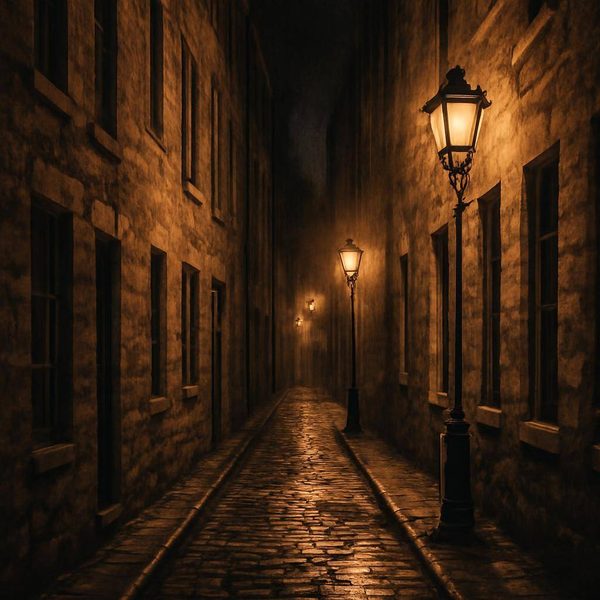
Old Montreal at night is a different place from the cobblestone tourist circuit of the afternoon. The restaurant terrasses have emptied. The carriages have gone. What remains are the buildings themselves — the late nineteenth-century stone façades, the narrow alleys between them, and the particular quality of silence that fills a space where the ground below you is older than anything visible above it.
The Montreal Ghost Stories Archive, documented by researchers at Haunted Montreal, is a serious project: a repository for oral histories, folklore, and reported paranormal experiences associated with specific locations in the city. The guide draws on it directly. Some of what he describes is atmospheric local legend; some of it is history dark enough that it does not need embellishment.
The oldest story is also the most straightforward. Pointe-à-Callière, the archaeology museum at the southern edge of Old Montreal, sits over the actual 1642 founding site of Ville-Marie. The museum's underground galleries descend through the city's first burial ground, its first fortifications, and a nineteenth-century sewer that was itself built over what came before. Walking above that ground in October, knowing what is layered below it, produces a specific kind of attentiveness.
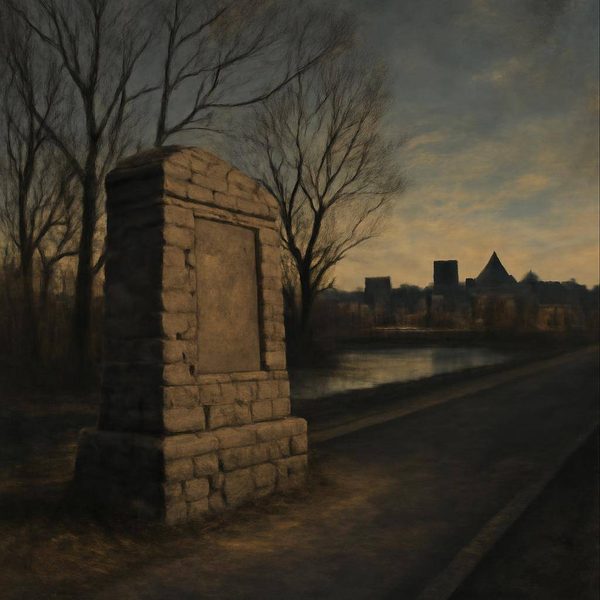
The walk moves west. The Griffintown neighbourhood, once one of the most densely populated working-class districts in Canada and home to successive waves of Irish, French-Canadian, and later immigrant communities, has been substantially redeveloped. New residential towers occupy lots that held factories and tenements. But the Black Rock survives. The rough fieldstone monument marking the mass grave of Irish immigrants who died of typhus during the 1847 famine migration stands at the edge of a busy road near the canal, easy to miss, quietly specific about what it marks. A plaque records the number. The number is large.
Ghost tour guides in Montreal operate on a distinction that matters: between the legend and the record. The Grey Nun ghost stories associated with the old Hôpital Général on rue Saint-Mathieu are folklore — specific, local, attached to a named religious order with a documented history in the city. The Black Rock is not folklore. It is a grave marker. The tour holds both kinds of story, and it does not confuse them.
By the time the group returns to the Old Port, the temperature has dropped further. The Tour de l'Horloge — the stone clock tower at the eastern end of the waterfront, designated a National Historic Site — is lit against the river. The St. Lawrence is very wide here, and very dark, and the south shore lights across it are remote enough to feel like another country.
Montreal buries things and then builds over them. The city's geography — the mountain to the north, the river to the south, the island pushing east and west — has always forced density and layering. The underground pedestrian network carries thousands of people daily through passages that run beneath foundations that run beneath older foundations. The ghost tours are popular partly because they give visitors a framework for noticing what is already there: the dates on the buildings, the stones in the streets, the monument beside the road that most people drive past without stopping.
The walk ends. The guide points out the relocated starting square on a map, in case anyone wants to find it again in daylight. The cobblestones underfoot are original. The cold is original too.
Frequently Asked Questions
What practical route does this Montreal story follow?
It follows source-backed places and route anchors from the guide, giving orientation and atmosphere while leaving live transport and opening details to the linked sources.
Which live details should I check before using this Montreal route?
Check current transport, access, opening and weather information from the linked official or operator sources before travelling.
What does this route help visitors understand about Montreal?
It turns source-backed places, route anchors and local context into a readable visitor route, so the story supports the main guide rather than replacing practical planning.
This is a fictional visitor story generated from source-backed place facts, image evidence and visitor-feel signals. It is not a first-hand WorldTownGuide visit. Named places, routes and historical references are source-backed; the visitor character and narrative events are invented.
Sources: Pointe-a-Calliere Museum Official Site • Landmarks of Montreal - Wikipedia • Haunted Montreal: Ghost Tours, History and Legends - Tripjive • Haunted Old Montreal Ghost Tour - Haunted Montreal • Ghost Tours - Haunted Montreal • 13 spooky places in Montreal to visit after dark - Tourisme Montreal