Mumbai's street food reflects the city's density, diversity, and pace. Vendors operate from carts, stalls, and beachfronts, serving quick meals and snacks to residents and visitors throughout the day and night. The food itself draws from Maharashtrian traditions while incorporating influences from across India, creating dishes that are specific to Mumbai or have become strongly associated with the city.
Core Dishes
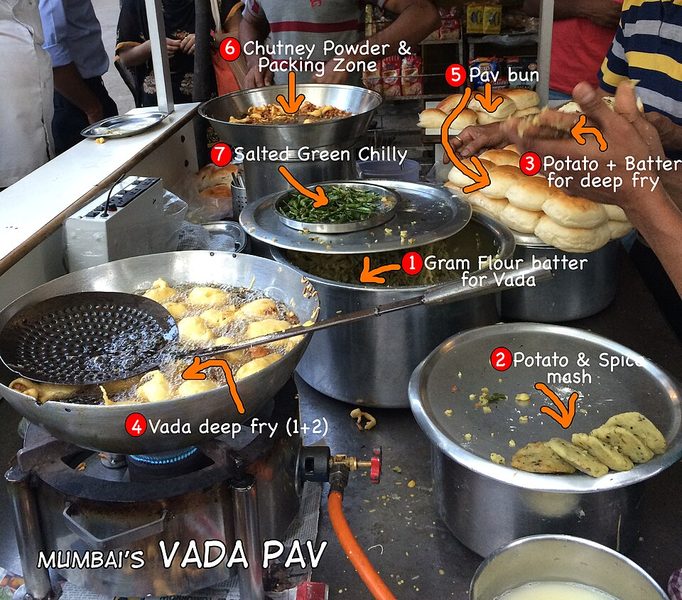
Vada pav is Mumbai's signature street food—a deep-fried potato fritter (vada) sandwiched in a bread roll (pav) with chutneys and sometimes a fried green chilli. The dish emerged as affordable, filling food for textile mill workers in the mid-20th century and spread across the city. It remains ubiquitous, with vendors at railway stations, markets, and street corners.
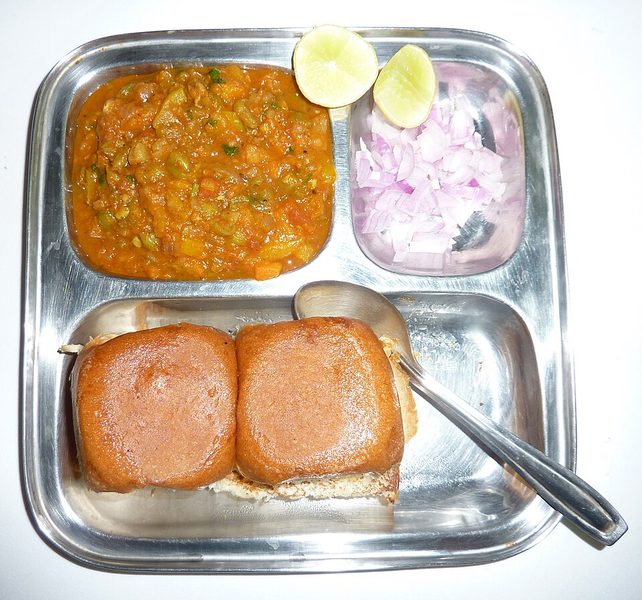
Pav bhaji consists of a spiced vegetable mash (bhaji) served with buttered bread rolls (pav). The dish is prepared on a large flat griddle, with the bhaji cooked and mashed in generous amounts of butter. Pav bhaji originated in Mumbai and is now found across India, but the city's versions remain definitive.
Bhel puri is a mixture of puffed rice, sev (fried noodles), chopped vegetables, and tamarind and green chutneys. The vendor assembles it fresh, mixing ingredients in a large bowl before serving in a paper cone or plate. Pani puri (also called gol gappa in northern India) involves small, crisp spheres filled with spiced water, tamarind chutney, and chickpeas or potatoes. The eater consumes each puri whole, creating a burst of flavours.
Key Locations
Juhu Beach on Mumbai's western shoreline serves as one of the city's major street food hubs. Vendors line the beach, particularly active during evenings and weekends. The beachfront setting combines the food experience with views of the Arabian Sea. Pav bhaji, bhel puri, and various chaat items dominate the offerings.
Chowpatty Beach in South Mumbai, also known as Girgaon Chowpatty, has a similar vendor concentration. The beach is historically significant in Mumbai's public life and remains a gathering point. The street food here includes bhel puri and pav bhaji, prepared by vendors who have operated in the area for decades.
Mohammed Ali Road in central Mumbai becomes particularly active during Ramadan, when food stalls operate through the night, serving kebabs, biryani, haleem, and sweets. The area is known for non-vegetarian specialties, with vendors such as those near Minara Masjid serving tandoori dishes and rolls. Outside of Ramadan, the area maintains its reputation for meat-based street food, though the intensity and variety peak during the fasting month.
Railway stations across Mumbai function as street food distribution points. Vendors operate outside and, in some cases, on platforms, serving vada pav and other quick snacks to commuters. The suburban railway system moves millions daily, and the food vendors integrate into this flow, providing meals that can be eaten while walking or standing.
Practical Considerations
Street food in Mumbai is generally affordable, with most items costing between ₹20 and ₹100. Vendors prepare food to order or in small batches, meaning freshness is typical. However, hygiene standards vary considerably. Choosing stalls with visible turnover—where food is prepared frequently and consumed quickly—reduces risk. Bottled water is advisable over water from unknown sources.
Spice levels can be high by default. Vendors often adjust heat on request, though specifying preferences clearly helps. Vegetarian options dominate Mumbai's street food landscape, with vada pav, pav bhaji, and most chaat items containing no meat. Mohammed Ali Road and certain other areas specialise in non-vegetarian dishes.
Street food activity peaks during evenings and weekends. Beach areas like Juhu see the most intense activity from late afternoon through to late evening. Mohammed Ali Road's full energy emerges after sunset, particularly during Ramadan. Late-night options exist across the city, with certain vendors operating until early morning, especially near transport hubs and areas with nightlife activity.
Regional and Community Variations
Mumbai's street food includes dishes from specific regional and community traditions. Misal pav, a spicy curry made from sprouted lentils and served with bread, originates from Maharashtra and appears on many street food menus. Kheema pav, minced meat cooked with spices and served with bread, reflects Parsi and Muslim culinary influences. Dahi puri, a variation on pani puri with yoghurt added, is particularly associated with beach vendors.
Each community and neighbourhood develops slight variations in recipes and preparation methods, meaning the same dish name can result in different experiences depending on location and vendor. This variation is part of the city's street food character, with long-term residents often having strong preferences for specific vendors or areas based on these distinctions.
Sources: Best Places for Mumbai Street Food - Wanderon • Maharashtrian Street Foods - Outlook Traveller • Best Street Food in Mumbai Guide - Unstumbled • Street Food in Mumbai Guide - TripXL