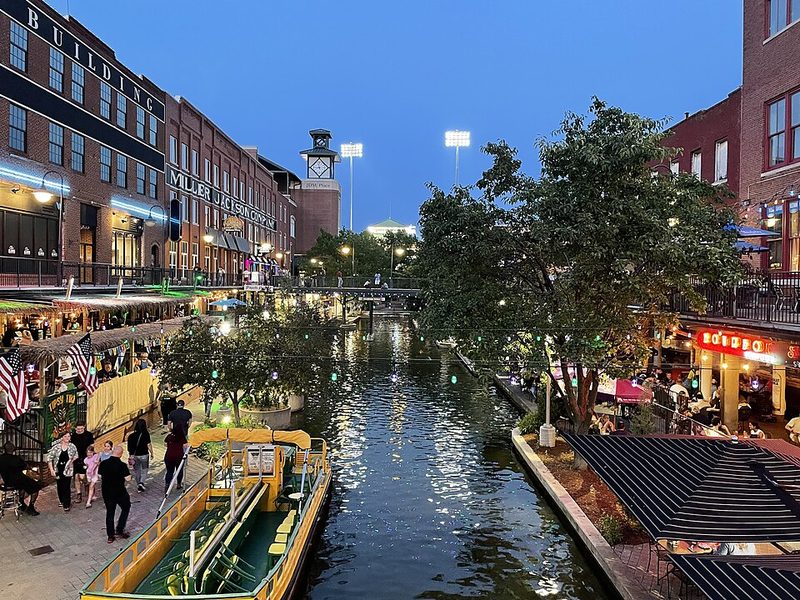
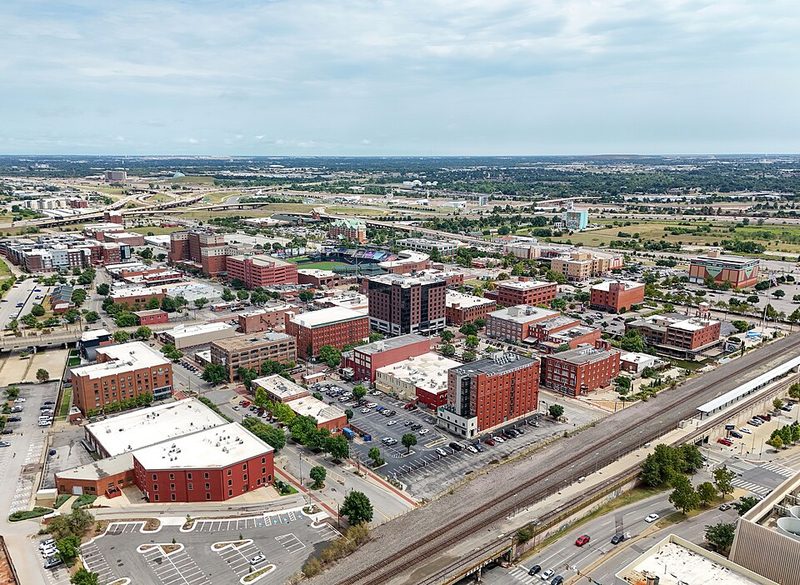
Bricktown occupies a former warehouse and distribution district immediately east of downtown Oklahoma City. Once a declining industrial zone lined with empty brick buildings, the area underwent comprehensive revitalisation beginning in the 1990s and now functions as the city's primary entertainment quarter, with restaurants, bars, a baseball stadium and a navigable canal that serves as the district's centrepiece.
History and Transformation
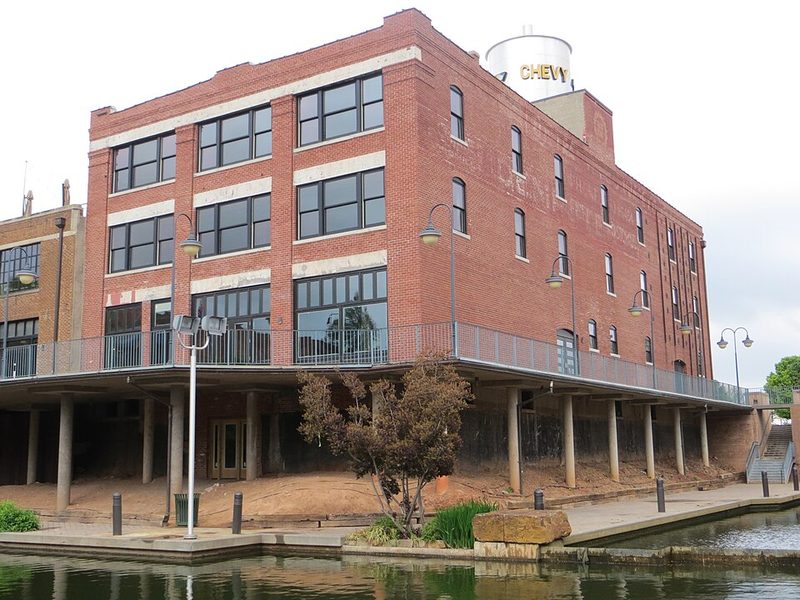
The district takes its name from the red-brick warehouses constructed in the early 20th century to serve Oklahoma City's rail and distribution trade. By the 1980s, the area had largely emptied as industry moved elsewhere. The Metropolitan Area Projects (MAPS) initiative—a voter-approved penny sales tax programme passed in 1993—provided public funding for downtown revitalisation. Early MAPS projects in Bricktown included the construction of the Bricktown Ballpark and a one-mile canal connecting north Bricktown with the Oklahoma River and the Chesapeake Boathouse.
The canal opened in the late 1990s and catalysed private investment. Developers converted warehouses into restaurants, retail spaces and residential lofts. The district's low-rise brick architecture and pedestrian-scale streets distinguish it from more car-oriented parts of Oklahoma City. What began as a single public infrastructure project evolved into a sustained transformation that reshaped how residents and visitors experience downtown.
The Canal and Water Taxi
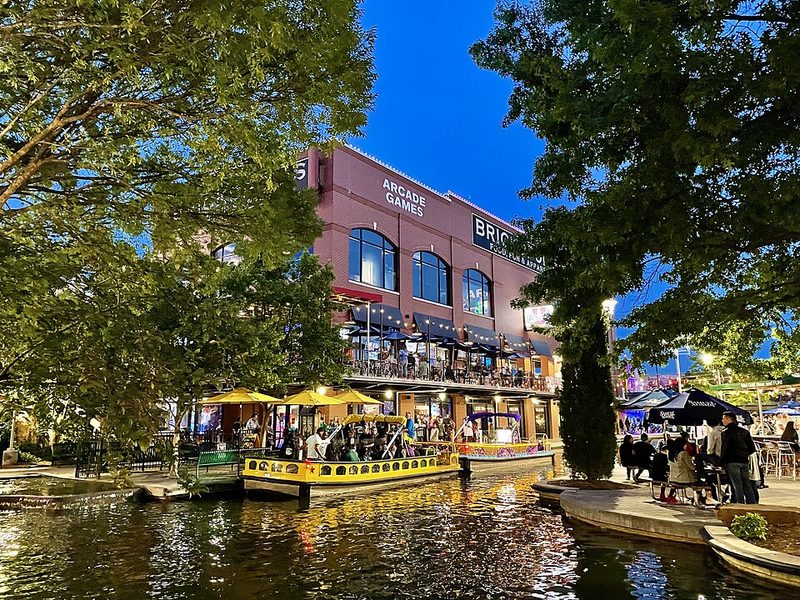
The Bricktown Canal runs approximately one mile through the district, lined with pathways, murals and landscaping. The canal is shallow and designed for aesthetic and recreational use rather than transport, though water taxis operate along its length. These guided tours provide commentary on Oklahoma City's history, local landmarks and the district's development. Services typically run seasonally, with extended hours during warmer months and on weekends. Fares and schedules should be confirmed locally, as they vary.
The canal area transforms after dark, when lighting and activity from adjacent restaurants and bars create a livelier atmosphere. Visitors describe the waterway as the district's most distinctive feature, offering a pedestrian-friendly alternative to the car-dependent character of much of Oklahoma City.
Attractions and Amenities
Chickasaw Bricktown Ballpark, home to the Oklahoma City Comets minor league baseball team, anchors the district's northern end. The stadium opened in 1998 as one of the first MAPS-funded projects and regularly draws crowds on game nights. A 16-screen Harkins cinema provides additional entertainment.
Bricktown's restaurant and bar scene spans casual dining, steakhouses, and nightlife venues. The district is within walking distance of downtown hotels, convention facilities and other attractions including the Oklahoma City National Memorial. This proximity makes Bricktown a common evening destination for visitors staying in the city centre.
Visiting Bricktown
The district is compact and easily explored on foot. Visitors arriving by car will find surface parking and garages, though availability varies during events and on weekend evenings. The area is busiest on Friday and Saturday nights, during baseball games, and when downtown events draw crowds. Those seeking a quieter experience may prefer daytime or weekday visits.
Bricktown represents a particular model of American urban revitalisation—publicly funded infrastructure used to stimulate private investment in a declining district. The result is an entertainment zone that has become central to how Oklahoma City markets itself to visitors, though its appeal relies more on the cumulative effect of the setting than on individual standout attractions.
Sources: Bricktown – Downtown OKC • Bricktown, Oklahoma City - Wikipedia • Bricktown Water Taxi • History - Bricktown OKC