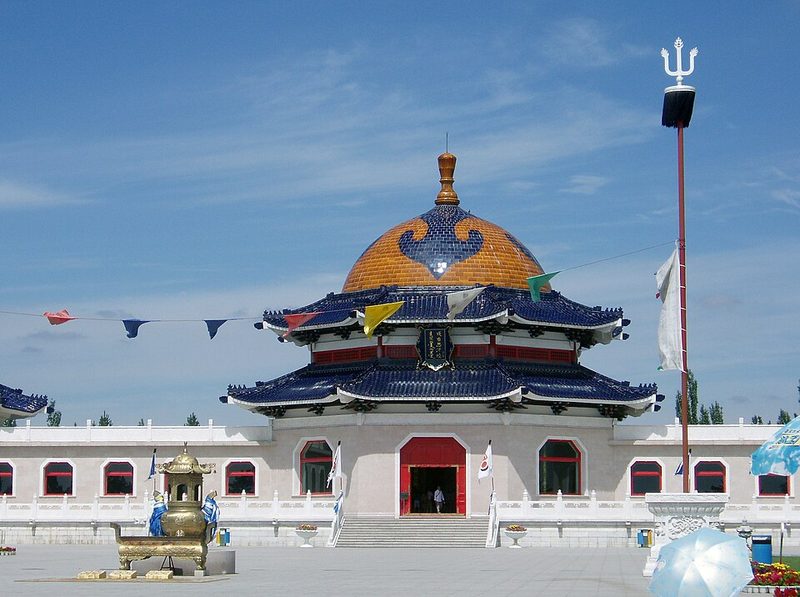
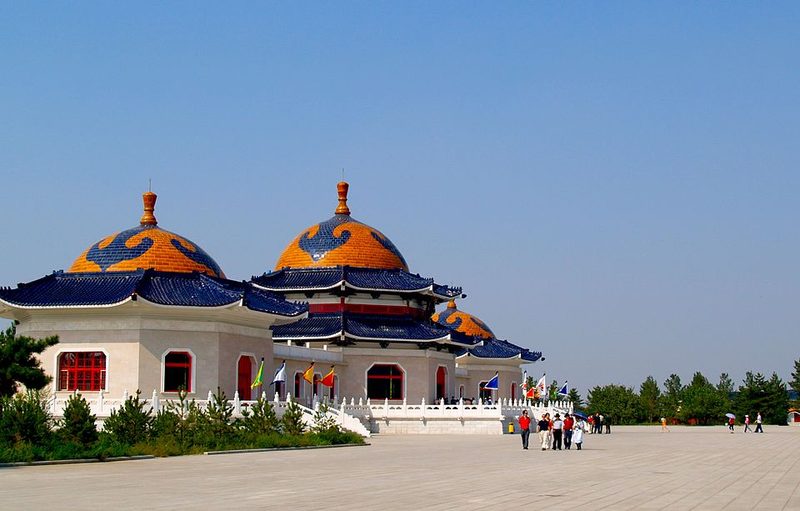
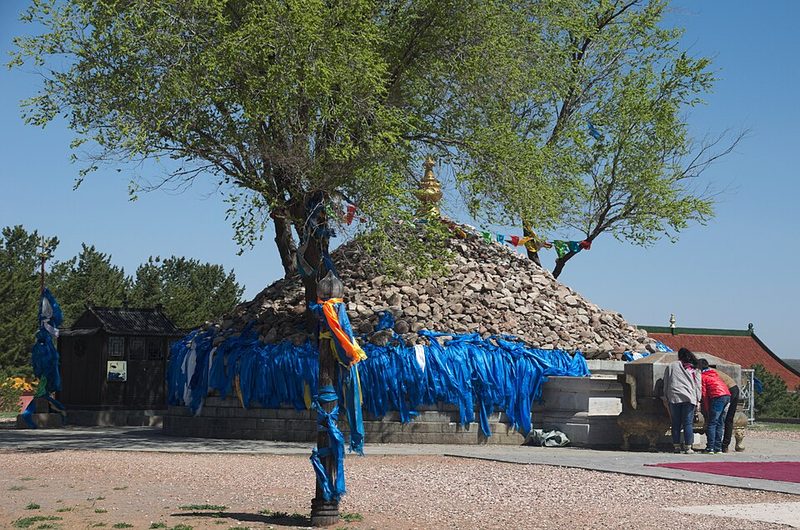
The Mausoleum of Genghis Khan stands on the Ordos Grassland in Ejin Horo Banner, roughly 50 kilometres south of central Ordos. This is not the actual burial site of Genghis Khan—his true grave remains unknown—but rather a memorial and spiritual centre that has served as the principal site of worship for the Mongol leader since the 15th century. The complex houses relics, cenotaphs, and historical displays connected to Genghis Khan and the Mongol Empire, drawing both pilgrims and visitors interested in Mongolian history and culture.
History and Significance
Genghis Khan died in 1227, and according to Mongol tradition, his burial location was kept secret. The current mausoleum was established centuries later to house his symbolic coffin and personal relics. The site in Ejin Horo Banner was chosen in accordance with Mongol custom and has been maintained as a place of reverence. During the 20th century, the mausoleum underwent several reconstructions, with the most significant expansion occurring in the 1950s and further development in the 2000s to accommodate growing visitor numbers. The complex remains an active site of traditional Mongol religious ceremonies, particularly during the annual Darhan Festival, when offerings are made according to centuries-old ritual practice.
The Complex and Displays
The mausoleum consists of three main halls arranged in a traditional Mongolian architectural style with distinctive white walls and ornate golden roofs. The Main Hall stands at the centre, housing a white marble statue of Genghis Khan that exceeds four metres in height. Behind the statue, a map depicts the vast territory of the Yuan Dynasty at its height. The coffin of Genghis Khan—symbolic rather than actual—is displayed here alongside ritual objects and historical artefacts.
The East Hall contains cenotaphs for one of Genghis Khan's wives and his fourth son, Tolui, who played a significant role in Mongol military campaigns. The West Hall is dedicated to other family members and displays related to the Mongol Empire's expansion. Throughout the complex, visitors encounter exhibits detailing Mongolian history, military tactics, and the administrative systems that allowed the empire to control territory from the Pacific to Eastern Europe during the 13th and 14th centuries.
Visiting Practicalities
The mausoleum is located approximately 28 kilometres from Xiangshawan (Resonant Sand Bay) in the Kubuqi Desert and about 50 kilometres from Kangbashi District. Road access is straightforward by private car or taxi from Ordos; expect a 40-50 minute journey from Kangbashi. Public transport options exist but are less convenient—check locally for current bus schedules. The site operates year-round, though specific opening hours and admission fees should be confirmed before travel as these change seasonally.
The surrounding grassland landscape provides context for the memorial's setting. Visitors should allow 2-3 hours for a thorough visit to all three halls and the grounds. English signage is limited; visitors without Mandarin or Mongolian may benefit from hiring a guide in Ordos before departure. Photography is generally permitted in outdoor areas but may be restricted inside the halls—observe posted signs. The site can be combined with a visit to Xiangshawan or other grassland attractions in a single day trip from Ordos.
Cultural Context
The mausoleum functions as both a tourist attraction and an active religious site. Mongolian families and communities continue to make pilgrimages here, particularly during traditional festival periods. Visitors should approach the halls respectfully, particularly when ceremonies are taking place. The Darhan Festival, held multiple times throughout the year according to the lunar calendar, features offerings of mare's milk, mutton, and traditional songs. Dates vary annually; check with local tourism offices if you wish to witness these ceremonies.
The emphasis here is on Genghis Khan's role as a unifier and state-builder rather than solely as a military conqueror. Modern Chinese and Mongolian scholarship presented in the exhibits highlights administrative innovations, trade route development, and the cultural exchange facilitated by the Mongol Empire's reach. This interpretive approach reflects both historical complexity and contemporary political context in Inner Mongolia.
Sources: Mausoleum of Genghis Khan - Wikipedia • Mausoleum of Genghis Khan - China Discovery • Genghis Khan's Mausoleum - Travel China Guide