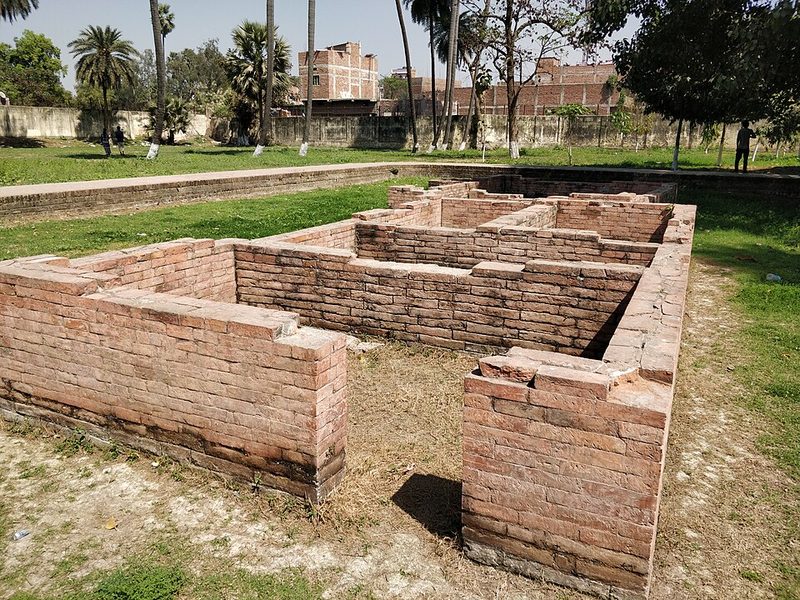
Kumhrar preserves the excavated remains of ancient Pataliputra, the Mauryan capital that thrived between the 4th century BCE and the Gupta period. Located approximately 5 kilometres east of Patna Railway Station, the site represents one of the few places where visitors can see physical traces of the city that served as the administrative and cultural centre of Emperor Ashoka's empire.
The Eighty-Pillar Hall
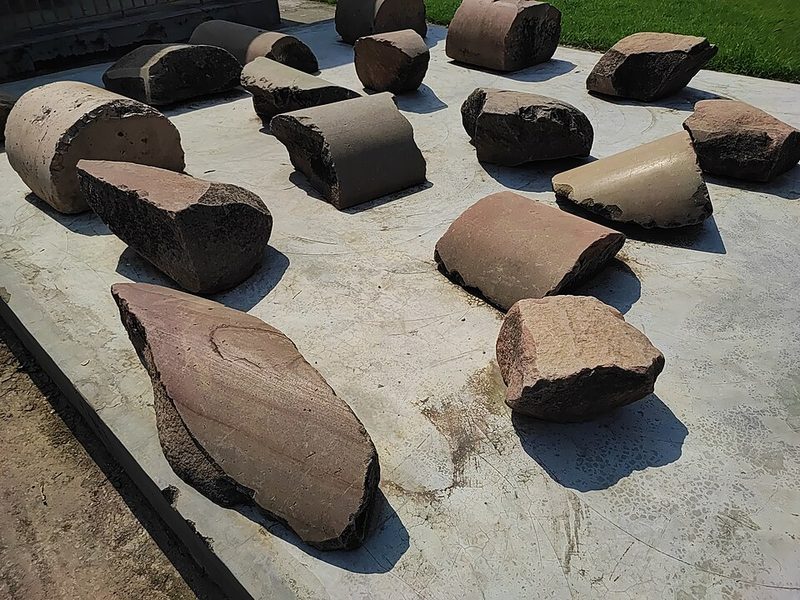
The most significant structure at Kumhrar is the assembly hall, identified by archaeologists as an eighty-pillared hypostyle hall dating to the Mauryan period (322–185 BCE). The remains consist of rows of polished sandstone pillars, each approximately 2 metres in circumference, arranged in a grid pattern. The pillars supported a large roof structure that once covered what appears to have been a royal assembly or administrative building. The polished finish on these stone columns demonstrates the technical sophistication of Mauryan-era stonework.
Excavations conducted by the Archaeological Survey of India starting in 1913 revealed not only the pillars but also the wooden palisade foundations that once surrounded the ancient city. These wooden structures, preserved in waterlogged soil conditions, provide evidence for the city's fortifications described in ancient Greek accounts by Megasthenes, the Seleucid ambassador who visited Pataliputra around 300 BCE.
Other Excavated Areas
Beyond the eighty-pillar hall, the Kumhrar complex includes several other excavated zones. The site reveals layers of habitation from different periods, with Mauryan remains typically found beneath later Gupta-era structures. Archaeological work has uncovered residential quarters, drainage systems and evidence of urban planning that align with descriptions of Pataliputra as a well-organised urban centre.
The site is now maintained as Kumhrar Park, with excavated areas protected under shelters and connected by brick pathways and landscaped lawns. Some excavated portions have been covered again to protect fragile archaeological remains from weathering, meaning visitors see selected preserved sections rather than the full extent of excavations.
Visiting Kumhrar
Kumhrar lies within Patna city limits, accessible by local transport from Patna Junction railway station. The Archaeological Survey of India maintains the site, and visitors should check current opening hours and entry arrangements locally or through Bihar Tourism information services. The site functions primarily as an open-air archaeological park rather than a conventional museum, though interpretive signage provides historical context.
For visitors interested in ancient urban planning and Mauryan history, Kumhrar offers tangible evidence of Pataliputra's scale and importance. The site works best when combined with visits to the Bihar Museum or Patna Museum, both of which hold artefacts excavated from Kumhrar and other Pataliputra sites, including sculptures, pottery and architectural fragments that provide additional context for what remains visible in situ.
Other Pataliputra Sites
Kumhrar forms part of a scattered complex of Pataliputra remains. Other excavated sites in Patna include Bulandi Bagh, which preserves parts of the ancient city's structures, and Agam Kuan, a deep well associated with Ashokan-era architecture. These sites are geographically separate within the modern city, and visitors planning to see multiple Pataliputra remains should allow time for travel between locations and verify current site accessibility.
Sources: Kumhrar - Wikipedia • Explore the Ancient City of Kumrahar in Patna - Incredible India • Pataliputra - Wikipedia