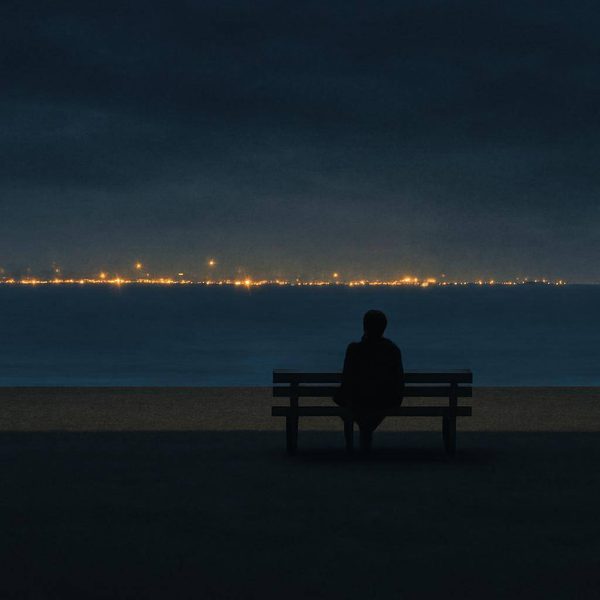

The train from London Waterloo brings you into Portsmouth Harbour station in the late afternoon, the platforms opening onto the waterfront terminal where boats come and go across the Solent with the regularity of buses. October light sits low and grey over the water. You cross the road rather than take the tourist route through Gunwharf Quays, heading instead toward the old town along the shore of the harbour.
Old Portsmouth announces itself through a change in the street grid. The roads narrow. The buildings press closer together. You pass through the Square Tower — one of the oldest surviving structures on the harbour defences, built in the early sixteenth century — and come out onto Grand Parade, where the Royal Garrison Church stands open to the sky.
The church was founded in 1212 as the Domus Dei, a hospital-chapel for the port, and it absorbed eight centuries of Portsmouth's history before a single night in May 1941 took the roof off the nave. English Heritage has kept it that way since: a roofless shell with the original chancel still intact at the far end, the autumn sky visible above the grass of the open nave. In 1662, Catherine of Braganza married Charles II here before the court moved north to London. Standing in the open nave on a grey October evening, it is easy to feel how completely that occasion has been overtaken by the city's later history of industrial war.
The route the guided ghost walks take through Old Portsmouth covers ground documented in a local paranormal record that dates many of its entries to specific buildings and specific centuries. The Blue Posts Inn, once somewhere near the older part of the town, was recorded as haunted by the ghost of a sailor murdered there before the building burned in 1870. The Paranormal Database entry is brief and specific: pre-1870, the Blue Posts, a murdered sailor. No building remains. The address has been absorbed into the later city. But the detail is oddly persistent — the kind of thing a port town with centuries of press gangs, debts and departures would naturally accumulate.
Portsmouth Cathedral stands a short walk further, on the High Street. Its chancel is the oldest fabric in this part of the city, built around 1185, and the building became a cathedral only in 1927 when the Diocese of Portsmouth was split from Winchester. It is free to enter, still active, and lit at night from outside so the tower is visible from the waterways. Sailors leaving for the Trafalgar campaign in 1805 would have passed this building on their way to the dockyard.
The dockyard itself is closed for the evening by now, but the Spinnaker Tower lights up the far end of the harbour, and the ferry to Gosport runs its last crossings from the pier. The passenger service is a matter of minutes — barely long enough to orient yourself to the harbour's width — but from the middle of the water you can see both shores clearly: the dockyard cranes on one side, the low spread of Gosport on the other, and the Solent opening west toward the Isle of Wight.
Back on the Portsmouth side, the streets of Old Portsmouth empty out early on a Tuesday in October. The season that brings tens of thousands to the Victorious Festival on Southsea Common in August is entirely absent now. The harbour is quieter than it looks in promotional images. A cold wind moves along the waterfront.
The Blue Posts is gone. The sailor's ghost, if it had anywhere left to haunt, would have to find somewhere else. But the route — from the station through the garrison church to the harbour mouth — covers enough of the old city in an hour's walk to understand why Portsmouth attracts the kind of historical record it does: a place where people left for dangerous voyages, came back changed or did not come back at all, and where the buildings that survive are mostly the ones the bombs missed.
Frequently Asked Questions
What is The Ghost of the Blue Posts: An Old Portsmouth Night?
The train from London Waterloo brings you into Portsmouth Harbour station in the late afternoon, the platforms opening onto the waterfront terminal where boats come and go across the Solent with the regularity of buses.
Why does The Ghost of the Blue Posts: An Old Portsmouth Night matter in Portsmouth?
The church was founded in 1212 as the Domus Dei, a hospital-chapel for the port, and it absorbed eight centuries of Portsmouth's history before a single night in May 1941 took the roof off the nave.
How does The Ghost of the Blue Posts: An Old Portsmouth Night fit into a Portsmouth visit?
The train from London Waterloo brings you into Portsmouth Harbour station in the late afternoon, the platforms opening onto the waterfront terminal where boats come and go across the Solent with the regularity of buses.
This is a fictional visitor story generated from source-backed place facts, image evidence and visitor-feel signals. It is not a first-hand WorldTownGuide visit. Named places, routes and historical references are source-backed; the visitor character and narrative events are invented.
Sources: Portsmouth Cathedral - Wikipedia • The Paranormal Database - Portsmouth • Royal Garrison Church, Portsmouth - English Heritage • Historic Portsmouth Legends and Ghost Walk - New England Curiosities • Portsmouth and Southsea Station - National Rail • Festivals - Portsmouth - visitportsmouth.co.uk