In This Guide
First Impressions and Setting
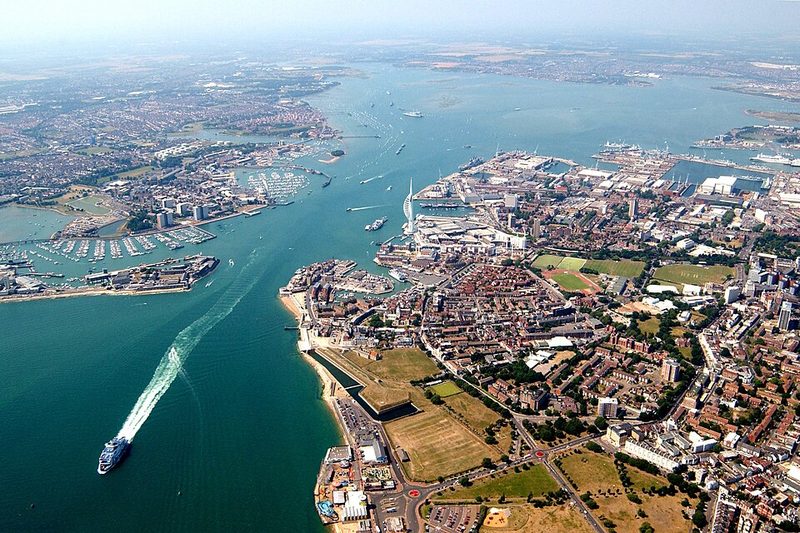
Arriving at Portsmouth and Southsea station, you step into a city that has compressed centuries of naval and industrial history into a compact island. The low-lying land — barely above sea level — means the skyline is defined not by hills but by water, cranes, and the Spinnaker Tower rising above the harbour mouth. Ferries move across the Solent, warships occupy berths in the naval base, and the old stone fortifications of Old Portsmouth frame views toward the Isle of Wight. The city sits 74 miles southwest of London, 22 miles southeast of Southampton and 50 miles west of Brighton and Hove — a position that makes it reachable by rail from several directions without the need for a car, and that gives it a distinctly coastal character difficult to miss on arrival whether by sight or smell.
The station area itself is functional rather than scenic: roads, bus stops, and a modest retail strip rather than an arrival set piece. A short walk brings you to Victoria Park, a Victorian public green space that offers one of the city's most welcome breathing points amid dense urban streets. The park sits close enough to the city centre to act as a natural orientation point for visitors arriving on foot from either rail station.
Old Portsmouth, tucked into the south-west corner of the island near the harbour mouth, has cobbled streets and old fortifications that give the city its most atmospheric walking. Southsea, the city's southern leisure district, offers a seafront esplanade, independent shops, and a character noticeably different from the dockyard-adjacent neighbourhoods of Portsea and Landport closer to the centre.
History, Identity and Stories Worth Knowing
Portsmouth's identity is inseparable from the Royal Navy. The dockyard that occupies the northern end of the island has been an active naval installation for centuries, and some of what happened inside it changed the world in ways easy to overlook.
In 1803, the Portsmouth Block Mills began production, using machinery designed by Marc Brunel and Henry Maudslay to manufacture the pulley blocks used aboard sailing ships. As documented by Historic England and held in the Science Museum Group's collection, this was the first fully mechanised production line in history — predating most of what we associate with the factory age of the Industrial Revolution. The mills still stand within the dockyard.
The city also has a literary claim that is both specific and verifiable. Arthur Conan Doyle lived and worked as a doctor in Southsea during the 1880s. It was here that he wrote A Study in Scarlet, the story that introduced Sherlock Holmes to the world. The Conan Doyle Collection, maintained by dedicated researchers, documents his time in the city in detail and refers to him plainly as a Pompey lad — using the local nickname for Portsmouth and its people. The birthplace of Charles Dickens is also preserved in the city: the modest terraced house on Old Commercial Road where he was born in February 1812 — the only surviving house directly associated with his birth — is open to visitors and gives a tangible sense of the cramped working-class Portsmouth from which one of England's most celebrated writers emerged.
The Second World War left an equally deep mark. Portsmouth was the primary embarkation point for the D-Day landings of June 1944. The D-Day Story museum in Southsea holds the Overlord Embroidery, a textile artwork commissioned to record Operation Overlord. Created over five years by the Royal School of Needlework and running to 83 metres in length, it is one of the largest embroideries in the world and stands as a deliberately human memorial to one of the largest seaborne invasions in history.
What Visitors Notice
The density is the first thing most people register. Streets in central Portsmouth are tightly packed, reflecting the constraints of island geography: there is simply no room to sprawl.
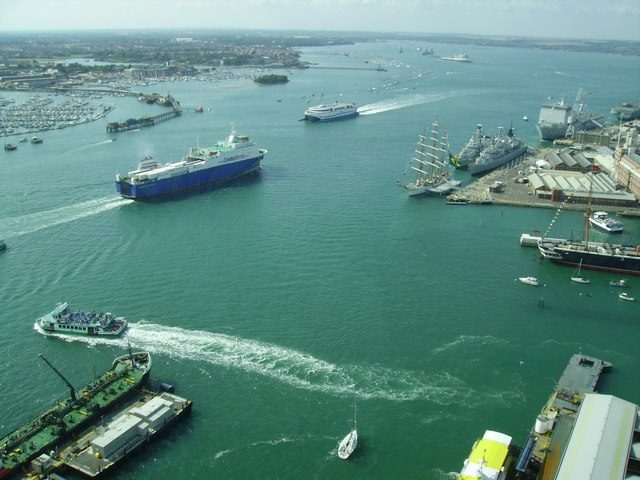
The Portsmouth Historic Dockyard is the city's primary visitor anchor. It contains HMS Victory — Nelson's flagship at the Battle of Trafalgar in 1805 — and HMS Warrior 1860, the first iron-hulled armoured warship in the Royal Navy. The dockyard also houses the Block Mills, which remain within the active naval base as one of the most significant industrial history sites in Britain.
The Mary Rose Museum, housed within the dockyard, displays the recovered hull and thousands of artefacts from Henry VIII's warship, which sank in the Solent in 1545 and was raised in 1982. The museum building, designed by WilkinsonEyre, was constructed around the ship to allow conservation to continue while visitors move through the space.
The Spinnaker Tower, the city's most visible modern landmark at the entrance to the harbour, offers panoramic views across the Solent and Portsea Island on clear days. It opened in 2005 after a construction period that attracted considerable public debate about cost overruns, and celebrated its twentieth anniversary in 2025.
The Royal Navy Submarine Museum is located across the harbour in Gosport, accessible by passenger ferry from Portsmouth Harbour Pier. Its centrepiece is HMS Alliance, a 1945 A-class submarine that visitors can board and move through — a physical experience of confined naval service that the Portsmouth side of the harbour cannot match. The museum traces British submarine history from the late Victorian period to the nuclear age.
The Portsmouth Museum and Art Gallery on Museum Road holds civic collections covering the city's history alongside fine art. It occupies a Victorian building and is the main city-run museum outside the dockyard complex.
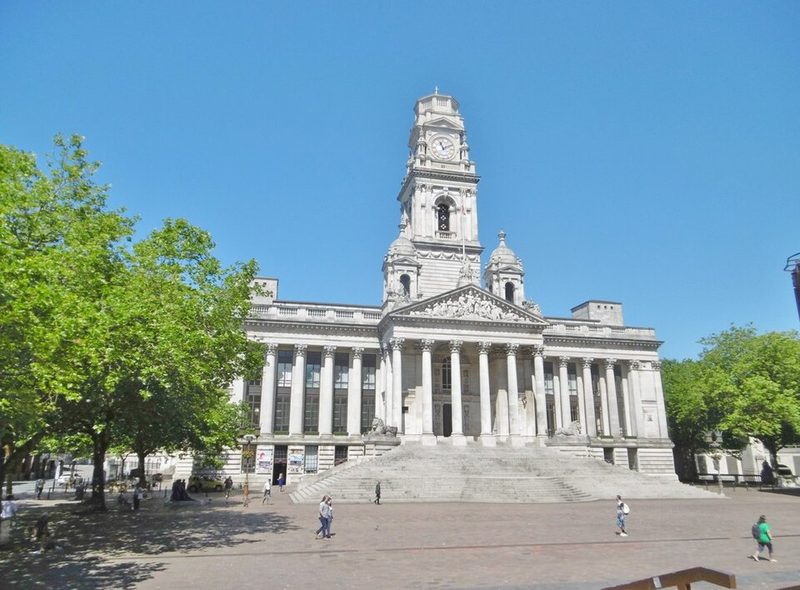
Portsmouth Cathedral in Old Portsmouth is one of the older ecclesiastical buildings in the city, with a foundation stone laid in 1185; the chancel and transepts date from the medieval period, though the building was substantially extended in the twentieth century. Portsmouth Guildhall, completed in 1890, is the city's main civic and events venue and stands as one of the more confident Victorian public buildings in the south of England, having been rebuilt after bomb damage in the Second World War.
Southsea Common — a wide stretch of open ground between the seafront and the residential streets — gives the city's southern edge a generous, unhurried feel. Victoria Park remains the most accessible green space for visitors staying closer to the city centre.
Music, Culture and Nightlife
Portsmouth has a documented live music history that goes further than its size might suggest. Researcher Michael Cooper's venue catalogue records the city's scene across several decades, identifying key stops including the Wedgewood Rooms in Southsea, which has operated as a live music venue and remains one of the more durable independent spaces in the city.
The most evocative chapter in that history is the Incredible Black Cat Club, which opened on London Road, North End, in 1968. It anchored a period of Portsmouth's music scene before the city's entertainment landscape shifted around the demolition of the Tricorn Centre — a brutalist shopping and entertainment complex that also housed venues including Granny's, which was part of the Pleasurama entertainment group alongside local clubs such as the Honky Tonk Bar and Club Tiberius. When the Tricorn was demolished, those venues went with it, closing a chapter of the city's nightlife that local writers and long-term residents still reference.
The Victorious Festival, held on Southsea Common over the August bank holiday weekend, brings significant live music to the seafront each year, with a programme that has included major acts. Visitors planning around the festival should note that accommodation across the island books up well in advance for that weekend.
Getting There and Around
Portsmouth and Southsea station and Portsmouth Harbour station are the city's two principal rail terminals, served by direct services to London Waterloo and Brighton, among other destinations. Portsmouth Harbour station sits at the waterfront and is the departure point for Isle of Wight ferry services and for international ferry crossings from the nearby Portsmouth International Port. According to Portsmouth Port, the international terminal offers more ferry routes than any other UK ferry port, with crossings to France, Spain and the Channel Islands operated by carriers including Brittany Ferries, Wightlink and Stena Line. Fratton station, around 1.25 km from the centre, provides a third rail stop serving the eastern part of the island and is convenient for visitors heading toward Fratton Park, Portsmouth Football Club's ground. Southampton lies 22 miles to the northwest and is reachable by rail in under an hour, making it a practical day-trip pairing.
The Southsea Hovercraft terminal operates from the Southsea Hoverport, approximately 1.6 km from the city centre, to Ryde on the Isle of Wight — one of the few remaining scheduled hovercraft services in the world; check the current schedule before visiting. The Gosport Passenger Ferry departs from Portsmouth Harbour Pier and provides the most direct route to the Royal Navy Submarine Museum on the opposite bank.
Within the city, First Bus operates local routes connecting the main districts, including the U1 service running through the city centre toward Fareham and Gosport, and route 23 connecting Havant, Cosham, North End and Gunwharf Quays. The compact geography of Portsea Island means many central attractions are reachable on foot from either main station, though the dockyard and Southsea are in opposite directions and take around twenty minutes to walk from Portsmouth and Southsea station each way. Travel Portsmouth publishes a public transport map with current route information; the myjourneyportsmouth.com journey planner covers local bus and ferry options.
Car-free visitors will find the city manageable. The main attraction clusters — the dockyard, Gunwharf Quays, Old Portsmouth and Southsea seafront — are all reachable on foot or by bus from the rail stations, and the Gosport ferry removes the need for a car to reach the submarine museum.
Practical Notes
Portsmouth operates on standard UK electrical and currency systems (GBP) and sits within the Europe/London timezone. Both UK and US travel authorities currently classify the United Kingdom at their lowest advisory levels, indicating normal precautions apply; no specific concerns are flagged for Portsmouth.
The island setting means accommodation books up quickly around the Victorious Festival in late August and around major naval events. Southsea offers the widest range of independent accommodation options and is well placed for the seafront and for visitors primarily interested in the D-Day Story museum. The Gunwharf Quays area is convenient for the dockyard, the Spinnaker Tower and the Harbour station ferry links.
The seafront at Southsea is exposed to Solent winds, which can make the esplanade uncomfortable outside summer months even on otherwise clear days. Victoria Park and the museum district offer more sheltered alternatives for mid-visit breaks in cooler weather.
Visitors travelling from outside the UK should verify current entry requirements with official government sources before travel, as conditions can change.