

What San Antonio is known for
San Antonio sits at the heart of south-central Texas as a sprawling city where three centuries of Spanish, Mexican, Indigenous and American history layer visibly into the present day. With over 1.5 million residents, it ranks as the seventh-largest city in the United States, yet visitors and residents speak of it as a place defined less by size than by character—a blend of riverside atmosphere, military heritage, and the symbolic weight of the Alamo that still shapes how the city understands itself.
Setting and First Impressions
The city occupies relatively flat terrain in Bexar County at the headwaters of the San Antonio River, sitting just above 200 metres elevation. The landscape offers few natural drama, but the river itself gives the urban core an unexpected texture. The River Walk—a canal-side development lined with restaurants and evening lighting—creates a distinctly European feel unusual in Texas. Beyond the historic downtown, the city stretches outward in patterns typical of Sun Belt growth: nineteenth-century districts bordered by suburban sprawl and contemporary commercial zones.
Visitors arriving by car notice how the city preserves continuity alongside expansion. Spanish colonial missions stand beside modern office parks, and the river remains a physical anchor shaping how residents navigate their surroundings. The climate stays warm most of the year, with hot summers characteristic of south-central Texas.
Historical Foundations
Governor MartÃn de Alarcón founded San Antonio on 1 May 1718 during Spain's colonial expansion into Texas. The settlement grew around Mission San Antonio de Valero, a religious outpost designed to convert Indigenous peoples to Catholicism. Five Franciscan missions were eventually established along the San Antonio River—these now form the San Antonio Missions National Historical Park, designated a UNESCO World Heritage Site.
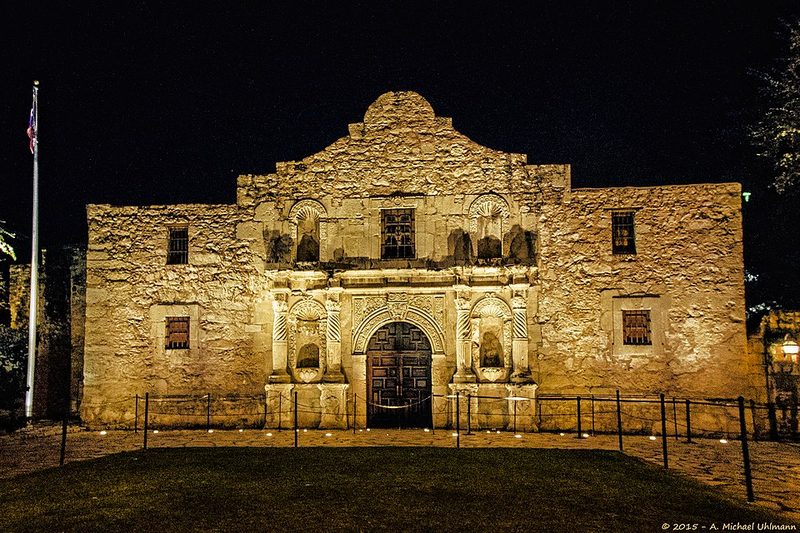
The city's modern identity remains inseparable from its role in two independence movements. San Antonio became contested ground during Mexico's independence struggle between 1811 and 1813. Later, in 1835–36, it occupied centre stage in the Texas Revolution. The Battle of the Alamo in 1836—where Texan forces were defeated despite their resistance—became a defining symbolic event in Texas history, though the decisive Battle of San Jacinto that secured independence occurred near present-day Houston.
By the late nineteenth century, San Antonio had become the largest city in Texas. The railway's arrival in 1877 transformed it into a major commercial hub, ending relative isolation and accelerating growth. Fort Sam Houston's establishment added a permanent military presence that earned the city the nickname "Military City, U.S.A."—a trademark officially adopted in 2017. Other official designations include "Alamo City", "Mission City", and "River City", each reflecting different layers of local identity.
The River Walk and Urban Core
The San Antonio River Walk represents the city's most distinctive urban feature—a network of walkways one level below street grade, following the river's course through downtown. The development, which took shape over decades, creates an unusual pedestrian environment where restaurants, shops and hotels line narrow waterways. Evening lighting activates the space, drawing both visitors and residents. GO RIO river cruises offer narrated trips along the waterway, providing perspective on how the river shaped the city's growth.
The Alamo—the former Mission San Antonio de Valero—sits adjacent to downtown as the city's most visited site. Beyond its symbolic role in Texas history, the complex offers insight into eighteenth-century Spanish colonial mission architecture and the convergence of Indigenous, Spanish and later Anglo-American settlement patterns.
Economy and Contemporary Character
San Antonio has emerged as one of the fastest-growing cities in Texas, though its development rests on multiple foundations rather than a single industry. The University of Texas at San Antonio, established in 1969, enrolls approximately 38,200 students and serves as a significant research institution. Toyota Motor Manufacturing Texas operates an automobile assembly plant producing full-size pickup trucks and sport utility vehicles. The Port Authority of San Antonio represents redevelopment built on the former Kelly Air Force Base footprint.
Fort Sam Houston remains an active military installation and substantial employer. These institutions—education, manufacturing, military infrastructure and public authority—provide economic foundation for a city that continues absorbing newcomers and expanding outward. The visible layering of architectural periods—colonial missions, nineteenth-century commercial buildings, twentieth-century civic structures, contemporary development—creates a landscape where the past does not feel buried.
Practical Orientation
San Antonio International Airport serves as the primary air gateway. The city functions as a regional hub for ground transport, accessible via Interstate 35 (running north–south through Texas) and other major highways. Local transport details and current schedules should be verified through official city sources.
The city's appeal lies in its role as a working urban centre with deep historical roots rather than as a purpose-built tourist destination. For visitors and those considering settlement, understanding San Antonio means recognising that its multiple identities—military centre, mission heritage site, manufacturing hub, growing metropolitan area—coexist daily in the same neighbourhoods. This layering of past and present, scale and character, gives the city its particular texture.
Climate and Timing
The south-central Texas climate means warm to hot conditions prevail for much of the year. Summers bring high temperatures typical of the region. Visitors should plan accordingly for outdoor activities, particularly when exploring the missions or River Walk during midday hours.