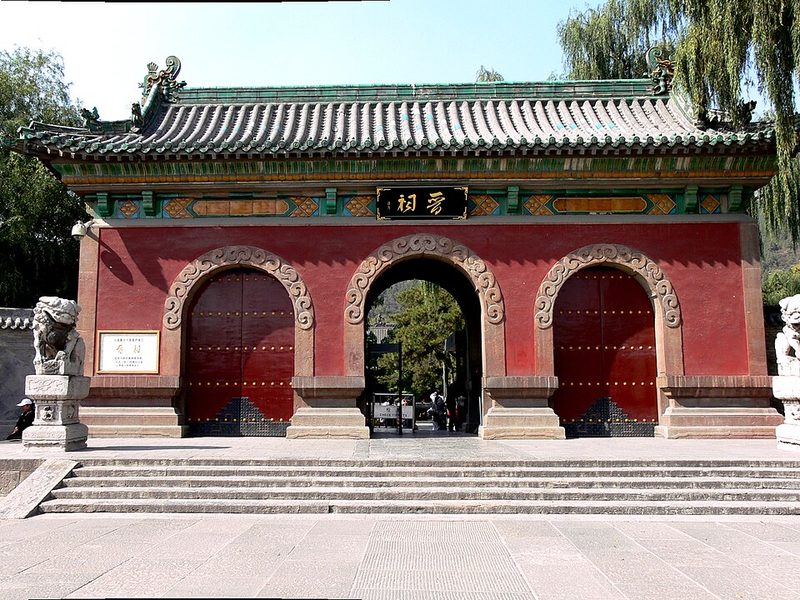
Jinci Temple sits 25 kilometres southwest of central Taiyuan, a temple complex that has evolved over three millennia from its origins in the Western Zhou Dynasty (11th century BC to 711 BC). The site functions as both an active place of worship and a repository of architectural history, with buildings spanning multiple dynasties and construction techniques that document the evolution of Chinese temple design.
History and Founding
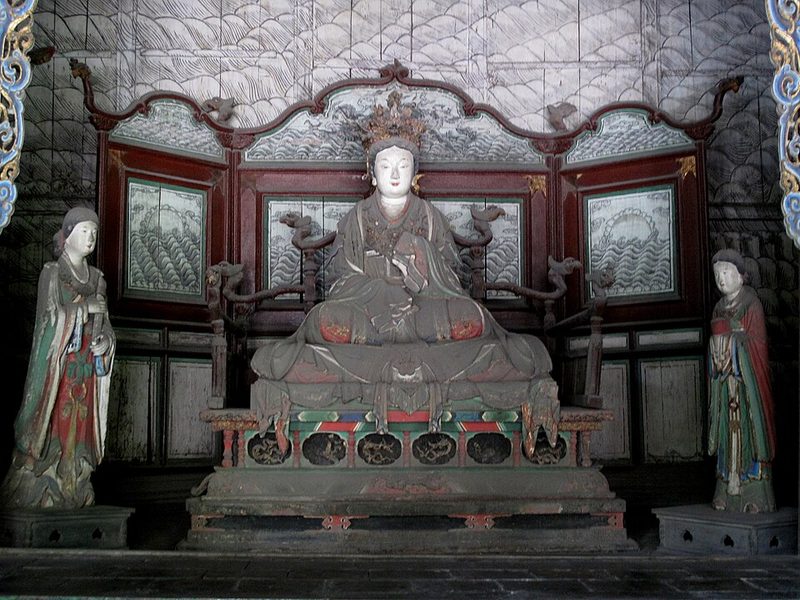
The temple complex originated as a shrine dedicated to the Duke of Tang, also known as Shuyu, the younger son of King Wu of Zhou who was enfeoffed in the region that would become Taiyuan. Over centuries, the site expanded to honour Shuyu's mother, Yi Jiang (the Sacred Mother), and incorporated Buddhist and Taoist elements alongside its original ancestral worship function. The name Jinci translates roughly as "Jin Ancestral Temple," referencing the ancient state of Jin that ruled this region during the Spring and Autumn period.
Most of the surviving structures date from the Tang Dynasty (618-907) onwards, with significant additions and renovations during the Song (960-1279), Yuan (1271-1368), Ming (1368-1644), and Qing (1644-1912) dynasties. This layering of construction periods has created an architectural catalogue that specialists use to study the development of Chinese wooden architecture, particularly the evolution of bracket systems and roof construction.
Shengmu Hall and Song Dynasty Architecture
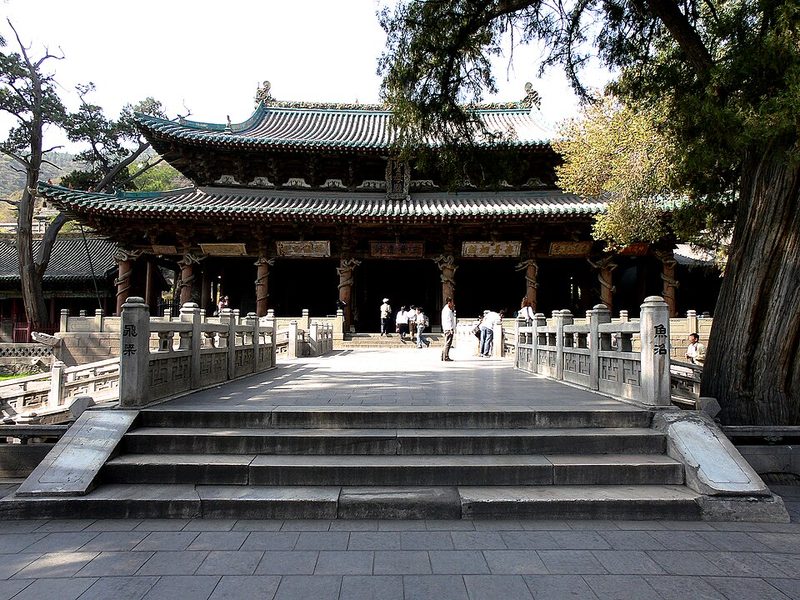
The Shengmu Hall (Hall of the Sacred Mother) stands as the temple's architectural centrepiece and its oldest surviving main structure. Built during the Tiansheng period of the Northern Song Dynasty (1023-1032 AD), the hall demonstrates construction techniques and proportions characteristic of Song-era temple architecture. The building measures seven bays wide and is surrounded by corridors, creating a spacious interior that contrasts with the more compact arrangements of later dynasties.
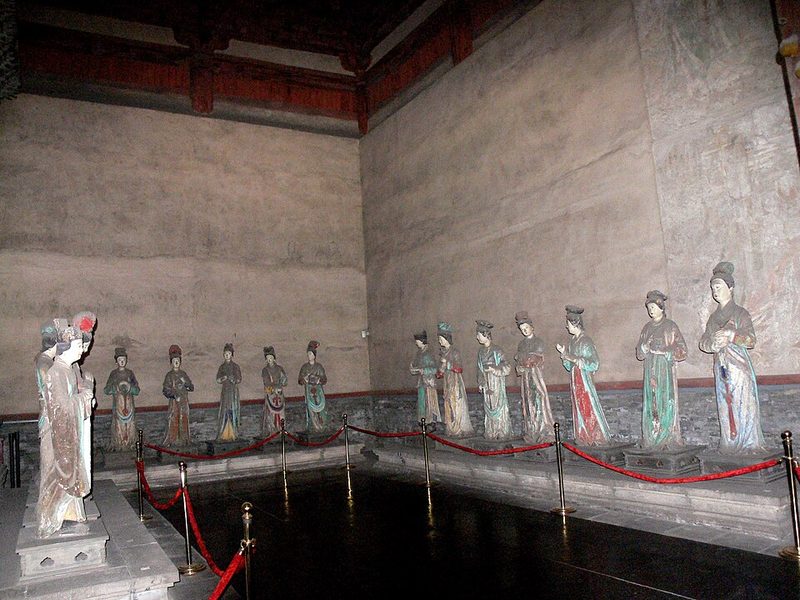
Eight wooden pillars inside the hall feature carved dragons coiling around their length, representing the earliest surviving examples of wooden dragon pillars in China. The craftsmanship required to carve these structural elements without compromising their load-bearing capacity demonstrates the technical sophistication of Song-era builders. The hall houses 42 painted clay statues of court ladies and attendants, created during the Song Dynasty, which have drawn particular attention from art historians for their naturalistic poses and the individuality of their facial expressions and gestures.
Water Features and Natural Setting
The temple complex integrates natural springs that have flowed continuously for thousands of years. The Nanlao Spring emerges within the temple grounds and feeds a series of ponds and channels that wind through the site. Historical records indicate these springs provided crucial water resources for early settlements in the region and contributed to Taiyuan's development as an agricultural and population centre.
Ancient trees, some claimed to be over 1,000 years old, shade the temple courtyards and pathways. The combination of water, vegetation, and architecture creates a microclimate distinct from the surrounding Loess Plateau landscape, particularly noticeable during summer months when the temple grounds offer cooler temperatures than the city centre.
Architectural Elements and Building Styles
The complex contains dozens of buildings representing different architectural periods and functions. Wooden structures display natural weathering accumulated over centuries, with exposed timber showing the distinctive darkening and texture that comes from hundreds of years of seasonal exposure. The buildings primarily use wood, tile, and stone construction methods, with bracket systems that demonstrate the evolution from simple to increasingly complex weight-distribution techniques.
Bridge structures within the temple grounds, including examples from the Ming Dynasty, show the integration of transportation infrastructure with religious architecture. These bridges served both practical functions—allowing passage over water features—and ceremonial roles in temple processions and rituals.
Visiting Practicalities
Jinci Temple operates as a functioning heritage site, though specific opening hours and admission fees change periodically. The site typically requires two to three hours for a thorough visit, though visitors with particular interest in architecture or religious history may wish to allocate more time. Signage in English is limited, so visitors who do not read Chinese may benefit from hiring a guide or preparing background information in advance.
The temple is accessible by public bus from central Taiyuan, though journey times can extend beyond 45 minutes depending on traffic conditions and the specific starting point. Taxis and ride-sharing services offer more direct access. The site includes both paved pathways suitable for most mobility levels and steeper sections with traditional stone steps that may present challenges for visitors with mobility limitations.
Sources: Jinci Temple - China Discovery • Jinci Temple - China Daily • Jinci Temple - Travel China Guide • Taiyuan Top Attractions - China Culture Tour