Vancouver's Chinatown is Canada's largest Chinese neighbourhood and one of the oldest in North America. Centred on Pender Street and surrounded by Gastown to the north and the residential district of Strathcona to the southeast, the area has existed since the 1880s, when Chinese workers arrived during the British Columbia Gold Rush and later for railway construction. The district retains its function as a working neighbourhood rather than a purely tourist precinct, though gentrification and demographic change have altered its character over recent decades.
The Dr Sun Yat-Sen Classical Chinese Garden
The central visitor attraction is the Dr Sun Yat-Sen Classical Chinese Garden at 578 Carrall Street, completed in 1986 in time for Expo 86. It was the first full-scale classical Chinese garden built outside China, modelled after Ming Dynasty (1368-1644) gardens from Suzhou. Local architects Joe Wai and Donald Vaughan worked with the Suzhou Garden Administration on the design, and 53 master craftsmen from Suzhou lived in Vancouver during construction to ensure authentic techniques. The garden structures were built using traditional methods without nails or screws.
The site includes both a paid classical garden and a free public park designed by the same team. The classical garden requires admission and offers a more complete experience of the Ming Dynasty design principles; the free park provides a preview but is limited in scope. Visitors interested in Chinese garden architecture should plan for the full admission experience.
Architecture and Landmarks
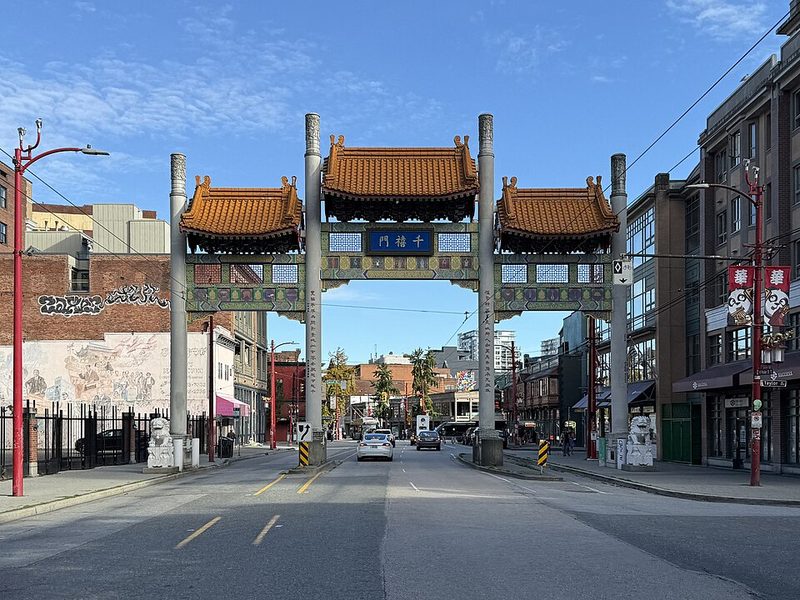
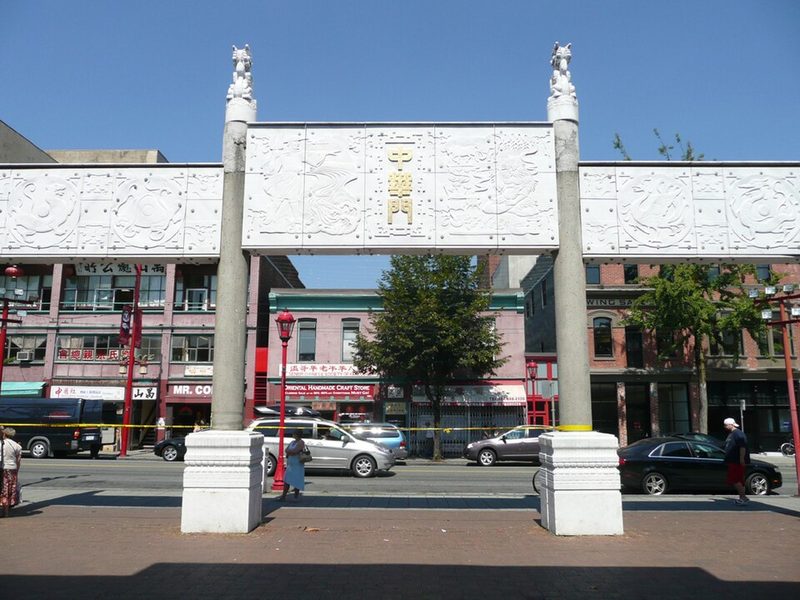
The Millennium Gate on West Pender Street marks the formal entrance to Chinatown and signals arrival in the historic district for visitors arriving on foot or by public transport. The neighbourhood features buildings dating to the late 19th and early 20th centuries, including the Sam Kee Building, noted as one of the narrowest commercial buildings in the world at approximately 6 feet (1.8 metres) wide. Its unusual dimensions resulted from street-widening that reduced the original lot size.
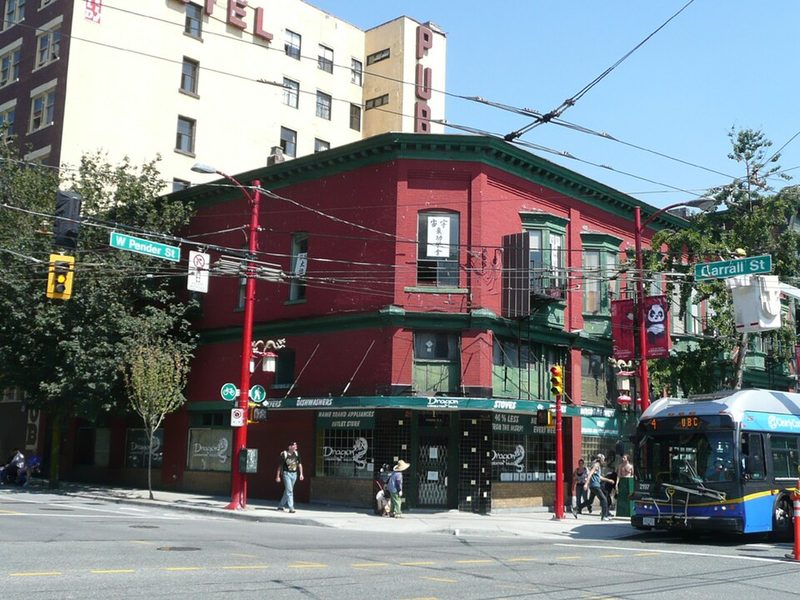
Pender Street and surrounding blocks retain traditional retailers selling fresh produce, fish, poultry and tea, alongside newer businesses. The architectural character reflects the area's age and working-class origins, with some buildings showing signs of deferred maintenance while others have been restored as part of gentrification efforts.
Cultural Events and Contemporary Context
The Chinatown Night Market operates on Friday through Sunday evenings during summer months (typically May through September, though visitors should confirm current schedules), featuring food vendors and retail stalls. The neighbourhood also hosts cultural events including the Lunar New Year celebration, though the scale and nature of these events have changed as the resident Chinese population has dispersed to other parts of Metro Vancouver.
The area's history is complex: it served as the social and economic centre for Vancouver's Chinese community for over a century, but demographic shifts, urban decay in adjacent areas, and economic pressures have created challenges. The Downtown Eastside, immediately to the northeast, experiences significant social issues including homelessness and drug addiction, and visitors should be aware that the boundary between tourist-focused Chinatown and these more difficult areas is not always distinct.
Practical Access
Chinatown is accessible via SkyTrain at Stadium-Chinatown Station. From downtown, it is a walkable distance east along Pender or via connecting streets, though visitors should remain aware of their surroundings, particularly in the evening. The neighbourhood is compact and can be explored on foot in a few hours. Those interested in the deeper history and architecture may wish to seek out guided walking tours that provide context for the buildings and the Chinese-Canadian experience in Vancouver.
Sources: Dr. Sun Yat-Sen Classical Chinese Garden - Wikipedia • Chinatown, Vancouver - Wikipedia • Vancouver/Gastown-Chinatown – Wikivoyage