
This is a fictional visitor story based on source-backed places, routes and visitor-feel signals. It does not represent a WorldTownGuide first-hand visit.
I. Oxenholme to Windermere
She had chosen October deliberately. The packet of notes she'd been carrying since spring - quotes from Ruskin, a printout of walking routes, a scribbled reminder to check the MV Tern's schedule - had survived two postponements and a failed weekend in August when the car parks at Bowness had been full by nine in the morning. October felt like the right correction.
The train from Oxenholme took perhaps twenty minutes, cutting south-east through the Cumbrian fringe before the landscape changed its register. At Staveley, a brief pause. Then the valley widened and the fells came up on either side of the carriage windows with the quiet insistence of something that has been there considerably longer than railways. She recognised the shift before the station sign confirmed it.
Windermere station deposited her onto a short walk to the bus terminus next door and a view of the town's practical face: a bus stop, a junction, a Tourist Information Centre in a wooden building with an hour's free parking in front. She had not come for the town. She turned uphill.
II. Orrest Head
Orrest Head is roughly half a kilometre from the station, which means that by the time most visitors have bought a coffee it is already within reach. The path is well-trodden and the ascent gradual enough that it catches people off guard - the view, when it arrives, is wider than the effort suggests it should be.
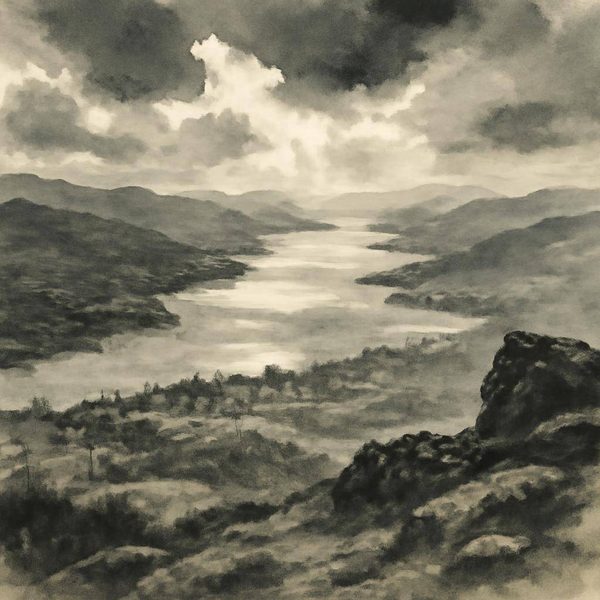
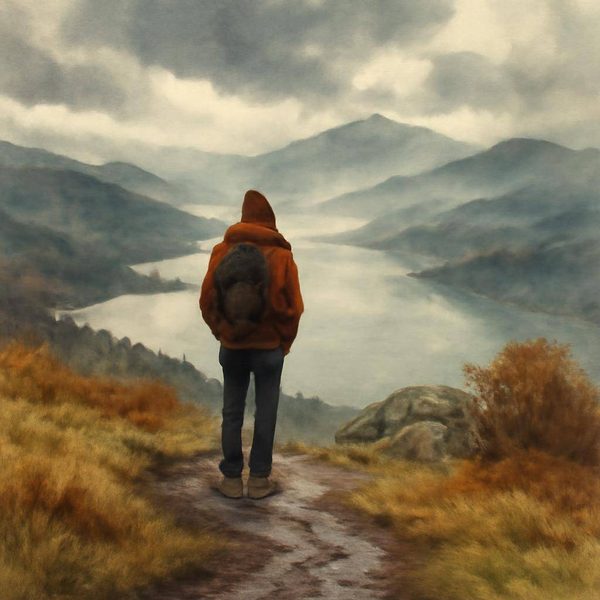
Lake Windermere laid itself out below in the pale October light. England's largest lake, nearly 17 kilometres long, with the fells of the western shore dark against a sky that kept threatening rain and then declining to follow through. Ramp Holme was a small wooded interruption of the surface somewhere in the middle distance. She wrote three sentences in her notebook and then stopped, because the lake was doing the work more efficiently than language was.
A couple came up behind her speaking German, consulted a phone briefly, pointed south towards Bowness, and went back down. Two walkers in full waterproofs appeared from a different direction and settled onto the same viewpoint with the easy proprietary air of people who had been here in worse conditions and expected to return in worse ones still. October is not the quiet season entirely, she noted. But it is quieter than August.
III. Down to Bowness and the Ferry
The 599 bus from Windermere station runs to Bowness-on-Windermere with what the Stagecoach route materials describe, with some justification, as panoramic views of the lake. She took it back down from the town rather than walking the two kilometres, and watched the water fill the left-hand window as Bowness came into view.
At Ferry Nab, she joined a short queue for the vehicle ferry - the practical crossing operated by Westmorland and Furness Council, carrying cars, bicycles and foot passengers from Bowness across to Far Sawrey on the western shore. This was not a lake cruise; it was a working ferry, and the difference was immediately legible in the machinery, the no-frills boarding, the ramp onto the flat deck between a Range Rover and two cyclists. Twelve minutes across the water, give or take.
She had read about the Claife Viewing Station - a National Trust property on the western shore, built in the late 18th century for the specific purpose of watching the lake's moods from a picturesque vantage point. The irony of a designed viewpoint appealed to her: the Victorians arrived by the same railway line she'd used this morning, and found that the landscape required a little architectural assistance to be appreciated correctly. The station had weathered into the hillside convincingly enough that it no longer looked designed at anything.
IV. The MV Tern
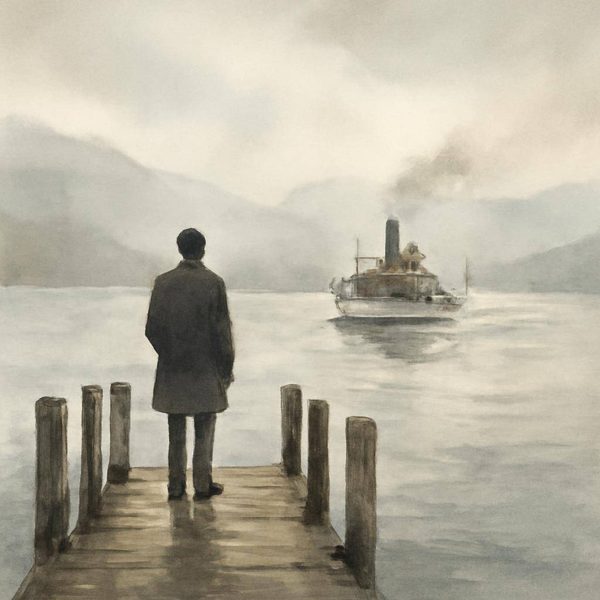
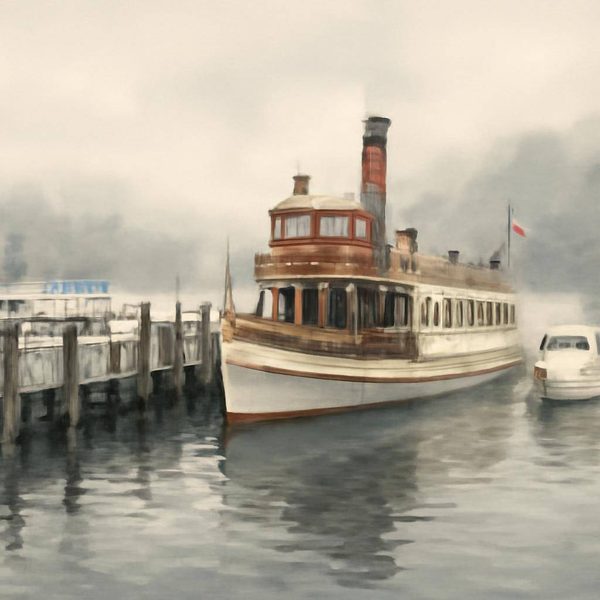
She took the passenger cruise back to Bowness rather than the ferry. The MV Tern, built in 1891, was already at the Ash Landing pier when she arrived - a white-hulled vessel of conspicuous age and conspicuous good condition, still in scheduled service after more than 130 years on this lake. There is something clarifying about travelling on a vessel whose original passengers arrived by steam train from Victorian Manchester for a fortnight's respite from industry, and whose current passengers arrive by the same railway line, many of them doing something that is not entirely different.
The return across the lake took perhaps forty minutes. The light was going by the time Bowness pier came into view. She took the 599 back up to the station, caught the connecting train at Oxenholme, and was back in Leeds before nine.
The three sentences from Orrest Head turned into a paragraph on the train. The notebook, she thought, had earned October after all.
Visitor note: The 599 bus runs between Windermere station and Bowness; the vehicle ferry operates from Ferry Nab, Bowness, to Far Sawrey (Westmorland and Furness Council). The MV Tern is a Windermere Lake Cruises passenger vessel; current schedules should be confirmed with the operator before visiting. The Claife Viewing Station is a National Trust property; current access details should be checked with the National Trust.
Sources: Good Journey - Adventures around Windermere (car-free route context) • Stagecoach - Windermere and Bowness Bus 599 • Westmorland and Furness Council - Windermere Ferry • National Trust - Claife Viewing Station and Windermere West Shore • Windermere Lake Cruises - MV Swan (fleet context)