Día de Muertos is one of the most culturally significant observances in Mexico, and Mexico City is one of the country's most important places to experience it. The tradition is a pre-Hispanic practice of family remembrance, recognised by UNESCO as an Intangible Cultural Heritage of Humanity, that was incorporated into the Catholic calendar after the Spanish colonial period but retains its roots in indigenous belief. The core idea is that the spirits of the dead return to the world of the living for a brief period each year, and that the living have a responsibility to welcome them home.
The observance is not a Mexican equivalent of Halloween, and visitors who treat it as such risk misunderstanding what they are seeing. It is a time of genuine grief, love and family ceremony.
Dates and Structure
The core observance falls on 1 November (Día de Todos Santos — All Saints' Day, traditionally associated with the spirits of deceased children) and 2 November (Día de Fieles Difuntos — All Souls' Day, when adults are remembered). In many families, preparation begins days or weeks earlier. Some communities observe Noche de Muertos — the night of 1 November — as a vigil.
The Ofrenda
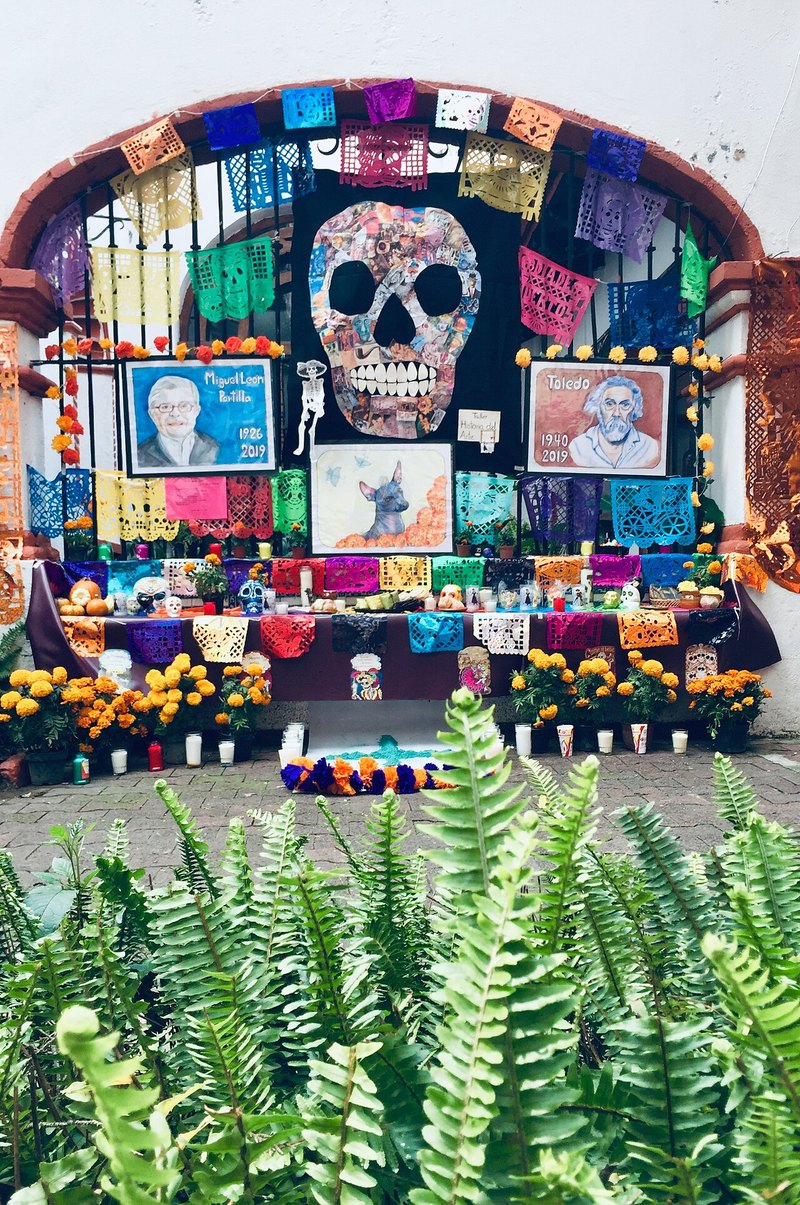
The centrepiece of the observance is the ofrenda, the home altar built to receive the returning spirits. Ofrendas are constructed with care and specific intention. They typically include photographs of the deceased, candles to light the way, cempasúchil — the vivid orange marigold (Tagetes erecta) whose scent is believed to guide spirits home — copal incense, water for the journey, and the favourite foods, drinks and belongings of the person being remembered. Pan de muerto — a soft, sweet bread decorated with bone-shaped dough — is placed on the ofrenda and also eaten by the living. The visual language of the ofrenda, marigold petals forming paths from the street to the altar, candles burning through the night and the particular smell of copal smoke, is one of the defining sensory experiences of the season.
Where to Experience It in Mexico City
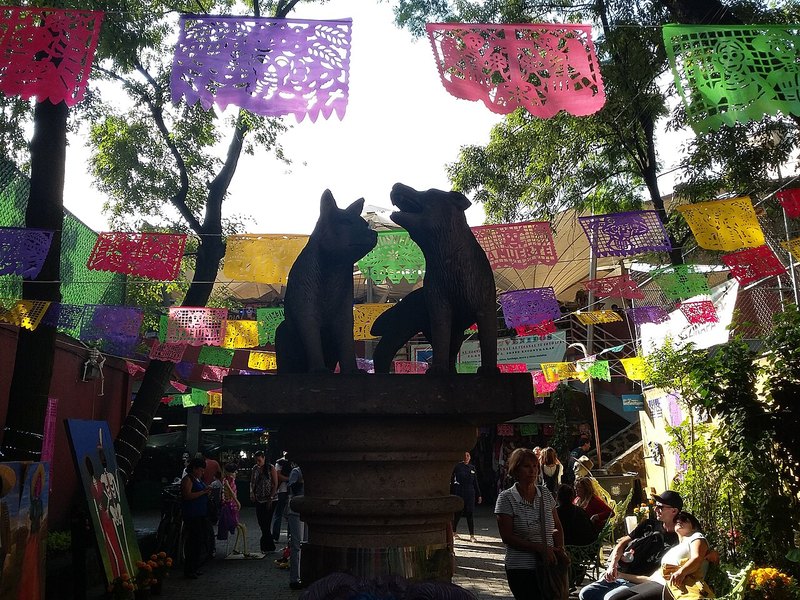
Coyoacán is the neighbourhood most associated with Día de Muertos atmosphere in Mexico City. Community ofrendas, street decoration, marigold markets and a genuine neighbourhood involvement make this the most rewarding area for visitors. An ofrenda monumental is typically installed at the Jardín Hidalgo / Palacio de Cortés area of the neighbourhood. Streets around the Mercado de Coyoacán and the central plazas are decorated with cempasúchil and papel picado (perforated tissue paper banners) in the days leading up to 1 and 2 November.
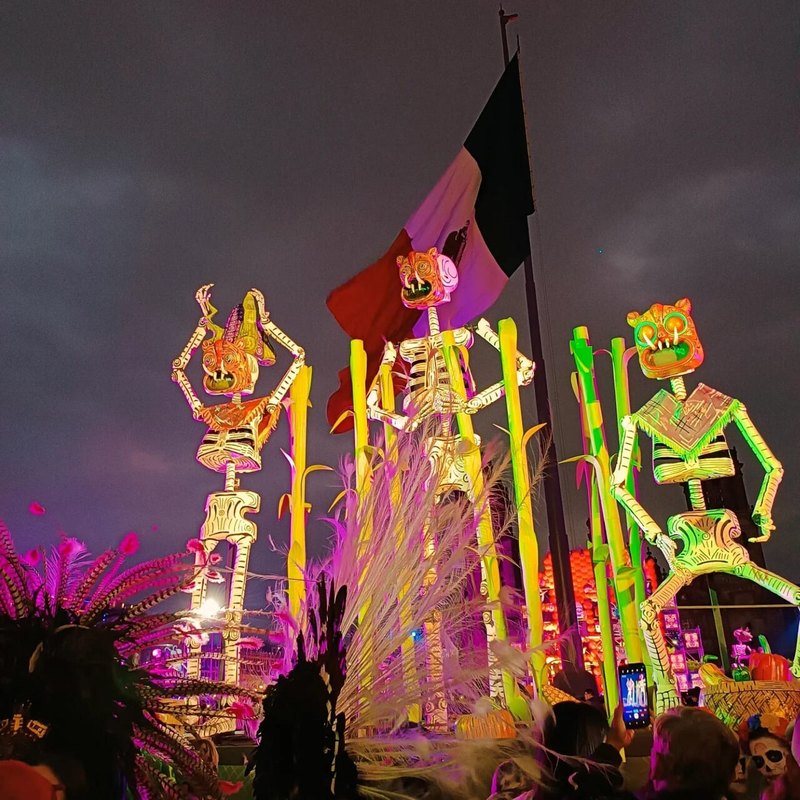
The Zócalo (Plaza de la Constitución) in the Historic Centre is another major site. A monumental ofrenda in the Zócalo has become a well-established feature of Mexico City's public programming in recent years, alongside cultural activities across the city centre. In 2025, the city government announced more than 400 free cultural activities for the season across the city, according to reporting in Proceso magazine.
Official programming — including parades, exhibitions, theatrical productions and community events — is organised each year by the Secretaría de Cultura de la Ciudad de México. Programme details, venues and dates change annually. Visitors must consult current official sources rather than relying on previous years' information:
- Official cultural calendar: cartelera.cdmx.gob.mx
- Secretaría de Cultura CDMX: cultura.cdmx.gob.mx
Planning a Visit for Día de Muertos
Accommodation: The period around 1 and 2 November sees high demand across central colonias and particularly in Coyoacán. Booking well in advance is essential.
Transport: The Metro is the most reliable way to move around the city during large public events, when road congestion can become severe. The Viveros, General Anaya or Coyoacán stations on Line 3 serve the Coyoacán neighbourhood. For the Historic Centre and Zócalo, Lines 2 and 8 serve the Zócalo station directly.
Timing: The most atmospheric period is the evening and night of 1 November through to 2 November. Preparation and decoration in Coyoacán and the city centre typically begins a few days earlier.
Weather and clothing: Late October and early November evenings in Mexico City can be cold at the city's altitude of over 2,200 metres. Visitors planning to spend time outdoors at night should bring warm layers.
Cultural approach: Visitors are guests at a living family and community ceremony. Respectful observation, without intrusion into private family altars or cemetery vigils unless invited, is the appropriate approach. Public events and community ofrendas in the Zócalo and Coyoacán are intended to be accessible to the public.
Frequently Asked Questions
When is Día de Muertos in Mexico City?
The core dates are 1 November, traditionally associated with deceased children, and 2 November, when adults are remembered. Public events and decorations often begin in the final days of October, but current dates should be checked against the CDMX cultural calendar.
What is an ofrenda?
An ofrenda is the altar prepared to welcome returning spirits. It usually includes photographs, candles, water, favourite foods and drinks, pan de muerto, copal incense and cempasúchil marigolds.
What is cempasúchil?
Cempasúchil is the bright orange Mexican marigold, Tagetes erecta. During Día de Muertos its colour and scent are used to guide spirits home, often in petals laid as paths to an ofrenda.
Is Día de Muertos for tourists?
Public ofrendas, cultural programmes and city events in places such as the Zócalo and Coyoacán are open to visitors. Private family altars and cemetery vigils should be approached only with respect and never intruded on unless invited.
Is the Zócalo ofrenda free?
The monumental ofrenda in the Zócalo is part of Mexico City's public cultural programming and is normally free to view. Specific dates, access arrangements and crowd controls can change each year, so check official CDMX sources before travelling.
Sources: Actividades por el Dia de Muertos en Ciudad de Mexico - EL PAIS Mexico • Que hacer en Dia de Muertos este 2025 - Proceso • Actividades culturales del Dia de Muertos en CDMX 2023 - UAM